
How to Say “Yes” in Asian Languages: A Comprehensive Guide
When traveling or communicating with people from different cultures, one of the first things you’ll need to know is how to express agreement or affirmation. Saying “yes” is a universal concept, but each Asian language has its own unique way of saying it. Understanding how to say “yes” in different Asian languages can enhance your ability to connect with locals and show respect for their culture. In this guide, we’ll explore how to say “yes” in several Asian languages, from Mandarin to Hindi and beyond.
Why Learn How to Say “Yes” in Different Asian Languages?
Knowing how to say yes in different Asian languages is an important part of building relationships and understanding cultural nuances. Whether you’re traveling or engaging with people from different backgrounds, it helps to show that you’re making an effort to learn their language.
Learning how to say “yes” not only helps in formal situations, but it also shows a level of respect and understanding that can go a long way in creating positive interactions.
How to Say “Yes” in Different Asian Languages
Let’s take a look at the word “yes” in a few popular Asian languages, and explore how it’s used in different contexts.
1. Mandarin Chinese (Chinese)
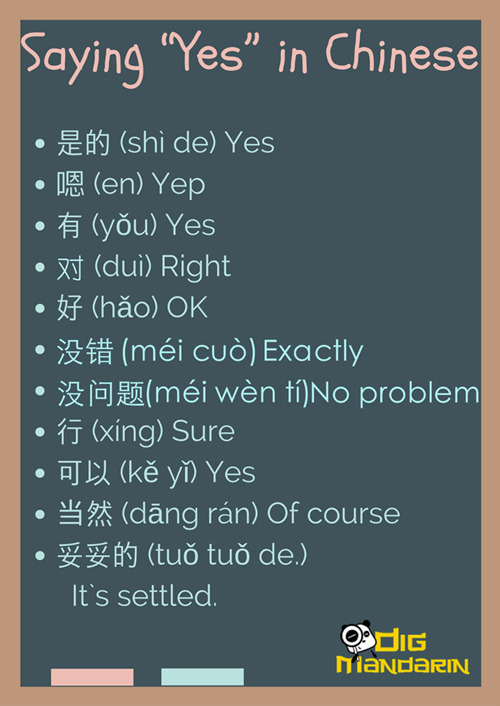
In Mandarin, the most common way to say “yes” is “是” (shì). It’s used in response to yes-or-no questions, similar to how “yes” is used in English.
Example:
- Question: 你要喝水吗? (Nǐ yào hē shuǐ ma?) — Do you want to drink water?
- Answer: 是的 (Shì de) — Yes.
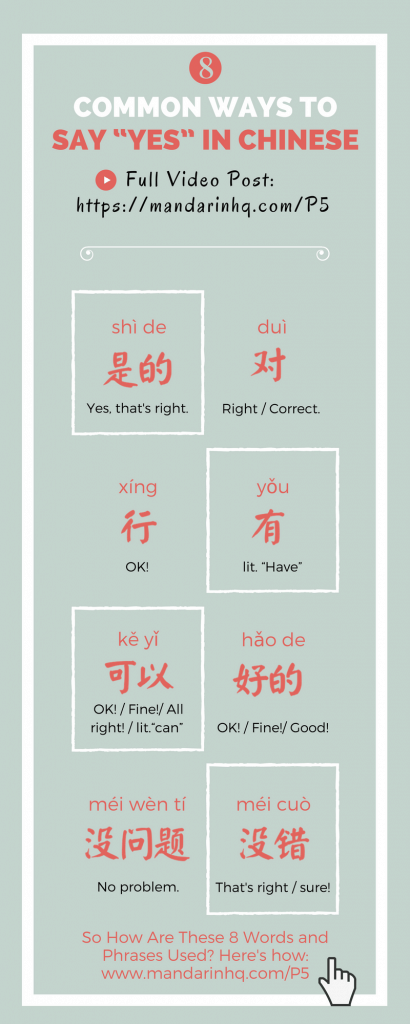
However, Mandarin also has other ways to say yes, depending on the context. For instance, “对” (duì) is often used when you agree with someone or confirm something.
Example:
- Question: 我们去吃饭吧? (Wǒmen qù chīfàn ba?) — Shall we go eat?
- Answer: 对 (Duì) — Yes (Agreeing with the suggestion).
2. Japanese
In Japanese, the most common word for “yes” is “はい” (hai). It’s widely used in both formal and informal settings.
Example:
- Question: 行きますか? (Ikimasu ka?) — Are you going?
- Answer: はい (Hai) — Yes.
Interestingly, Japanese has other expressions for yes, depending on the tone or situation. For instance, “ええ” (ee) is a more casual and less formal version of “yes.”
Example:
- Question: 今日会いますか? (Kyō aimasu ka?) — Will we meet today?
- Answer: ええ (Ee) — Yes (Informal).
3. Korean
In Korean, the word for “yes” is “네” (ne). It’s used when answering affirmative questions, especially in polite conversations.
Example:
- Question: 점심 먹을래요? (Jeomsim meogeullae-yo?) — Would you like to have lunch?
- Answer: 네 (Ne) — Yes.
Alternatively, “응” (eung) is a more casual way of saying yes, often used with close friends or in informal settings.
Example:
- Question: 집에 갈래? (Jibe gallae?) — Do you want to go home?
- Answer: 응 (Eung) — Yes.
4. Hindi
In Hindi, there are multiple ways to say “yes,” depending on the context. The most common word for “yes” is “हाँ” (haan), which is used in most situations.
Example:
- Question: आप खाना खा रहे हैं? (Āp khānā khā rahe hain?) — Are you eating?
- Answer: हाँ (Haan) — Yes.
For more formal responses, people may use “जी हाँ” (jī haan), which adds a level of respect to the affirmation.
Example:
- Question: क्या आप मेरे साथ चलेंगे? (Kya āp mere sāth chaleṅge?) — Will you walk with me?
- Answer: जी हाँ (Jī hāṅ) — Yes (Polite).
5. Thai
In Thai, the word for “yes” is “ใช่” (châi). It’s used similarly to how “yes” is used in English.
Example:
- Question: คุณไปหรือยัง? (Khun bpai rǔe yang?) — Have you gone?
- Answer: ใช่ (Châi) — Yes.
However, in Thai culture, “ครับ” (khráp) or “ค่ะ” (khâ) is often added to the end of a sentence for politeness. “ครับ” is used by males, and “ค่ะ” is used by females.
Example:
- Question: คุณจะไปไหม? (Khun jà bpai mái?) — Will you go?
- Answer: ใช่ครับ (Châi khráp) — Yes (Polite, male speaker).
6. Vietnamese
In Vietnamese, the word for “yes” is “vâng”. It’s used to affirmatively respond to questions, and it’s polite in nature.
Example:
- Question: Bạn có khỏe không? (Bạn có khỏe không?) — Are you well?
- Answer: Vâng (Yes).
Another informal version is “ừ” (ư), which is used between close friends or in casual conversations.
Example:
- Question: Chúng ta đi chơi không? (Chúng ta đi chơi không?) — Shall we go out?
- Answer: Ừ (Yes).
Tips for Using “Yes” in Different Asian Cultures
Understanding how to say yes is just the beginning. It’s also important to know when and how to use it. Here are a few cultural tips:
- Tone and Politeness: In many Asian cultures, the way you say “yes” can indicate your level of respect. In countries like Japan and Korea, using polite versions of “yes” shows good manners.
- Body Language: In some cultures, nodding your head while saying “yes” enhances the affirmation. For example, in Thailand, adding a slight bow while saying “ใช่” (châi) can reflect respect.
- Context: Some Asian languages, like Chinese, use different forms of “yes” depending on the situation (affirmation, agreement, confirmation).
FAQs About Saying “Yes” in Asian Languages
1. Is “yes” always the same across Asian languages?
No, “yes” varies across Asian languages. Each language has its own word, and often multiple variations, for expressing affirmation.
2. Do I need to worry about tone when saying “yes”?
Yes, especially in languages like Mandarin and Korean, the tone can affect the meaning. Always use the right level of politeness and formality.
3. How can I be polite while saying “yes”?
In most Asian cultures, adding respectful words or expressions like “sir” or “ma’am” (in English) or using honorifics in native languages will make your affirmation sound polite.
4. What should I avoid when saying “yes”?
Avoid being too casual in formal situations. For example, in Japan, using “ええ” (ee) in a formal setting may seem rude.
Conclusion
Learning how to say “yes” in different Asian languages not only helps in communication but also deepens your understanding of various cultures. Whether you’re traveling, doing business, or simply conversing, knowing how to say yes properly can go a long way in making connections and showing respect. The next time you’re in an Asian country, use these tips and make your interactions even more meaningful!
For more insights on Asian languages and cultures, check out the following resources:
Comment (0)